As a parent, you make hundreds of decisions about your child’s well-being every week. That goal has become increasingly more challenging as competing opinions come in from friends, family, the news, social media and other sources.
We’re here to help. As pediatricians, we are committed to ensuring that your children stay safe so they can grow into healthy young adults. Part of our commitment to that goal is making sure you have the most up-to-date information about pediatric vaccines.
We have spent decades studying vaccination safety to help you stay informed. Northbay Health pediatric experts have been featured on ABC 10 and in The Reporter, sharing their expertise on immunizations.
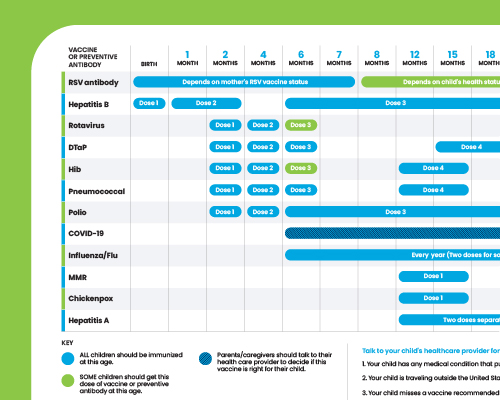
Northbay Health’s recommended vaccine schedule for children
How to decide on vaccinations for children
We know that your sole objective in reviewing vaccine information is to keep your child as safe as possible, and we share that goal. For that reason, we encourage you to discuss your concerns with us.
We’re here to listen and share information. You are an important part of your child’s care team, and we hope to work together with you as you make informed decisions about their health.
Northbay Health’s pediatricians encourage parents to review some of the most common questions we receive about immunizations for children, along with our answers.
Use your healthcare provider’s guidance and reputable sources, such as immunization schedules from the American Academy of Pediatrics and conversations with your pediatrician.
Soreness, redness, mild swelling at the injection site, tiredness and low fever, which typically go away within a day or two.
Timing has been established by scientists to protect children when they’re most at risk. By following this guidance, your child can have the best chance of strong, lasting immunity.
Your child is susceptible to multiple serious illnesses if they’re not vaccinated. Hospital systems have reported severe complications, hospitalizations, and even deaths of children who skip vaccinations. Outbreaks of disease like influenza and measles can devastate families and entire communities, which is why vaccinations are a powerful tool in protecting children. See which diseases are targeted by each specific immunization.
No. Children encounter thousands of antigens daily through play, food and the environment. The number of antigens in today’s vaccines is small by comparison and well within the capacity of your child’s immune system.
Yes. Combination vaccines reduce shots while providing the same protection. They’re tested for safety and effectiveness as combined products.
No. Inactivated vaccines can’t cause disease. Live vaccines use weakened germs that don’t cause the illness in healthy people.
No, the science behind children’s vaccines hasn’t changed. Childhood vaccines remain among the most-studied medical tools in history, and millions of children safely receive them every year.
Breakthrough infections can occur, but are usually milder and less likely to lead to complications or hospitalization than these diseases would be if your child wasn’t vaccinated.
No. Even though most children were protected from illnesses like measles and the flu in the past, numbers are rising steadily, partly due to lower vaccination rates. During the 2025 flu season, 288 children died of the flu, nearly 90 percent of whom weren’t vaccinated. This is the highest number of childhood flu deaths in more than 20 years. Measles cases are also at their highest level since 2000.
Parents don’t need to navigate these decisions alone. Talk to your pediatrician so you can find the best path to keep your child as healthy as possible.
Find a pediatricianOur commitment to your family
Northbay Health aims to be your trusted partner as you navigate immunization decisions.
"Regardless of how federal policy evolves, NorthBay Health’s responsibility remains the same: to provide care grounded in sound medical evidence and focused on the health and safety of our patients and community. We support California’s decision to continue following the American Academy of Pediatrics (AAP) recommended immunization schedule because it is based on the best available scientific evidence. Vaccine policy should be driven by rigorous science and transparent clinical evidence, not politics or unsubstantiated claims. We will continue to work with our physicians and families to make sure children receive care that reflects the best available evidence and protects them from preventable disease."
— Seth Kaufman, M.D., Chief Clinical Officer at Northbay Health
Resources
To discover more facts about childhood vaccines, check out the resources below:
- Northbay Health’s recommended vaccine schedule for children »
- The American Academy of Pediatrics recommended vaccine schedule for children »
- Hepatitis B Vaccine Given to Newborns Reduces Risk of Chronic Infection »
- Why Do Babies Need the Hepatitis B Vaccine? »
- Which Flu Vaccine Should Children Get This Season? »
- Vaccine Safety: Examine the Evidence »
- Evaluating Information »
- Personal Stories: Vaccine-Preventable Diseases »
- Personal Stories: Measles »
- Personal Stories: Influenza »
- West Coast Health Alliance: Public Health for All Vaccine Recommendations »
- West Coast Health Alliance: Assembly Bill 144 Vaccine Recommendations »